Rabbis for Human Rights (RHR)
Profile
| Country/Territory | Israel |
|---|---|
| Website | http://www.rhr.org.il/eng/ |
| Founded | 1988 |
| In their own words | Representing over 100 Israeli rabbis and rabbinical students from different streams of Judaism, we derive our authority from our Jewish tradition and the Universal Declaration of Human Rights. Our mission is to inform the Israeli public about human rights violations, and to pressure the State institutions to redress these injustices. |
Funding
- In 2020, total income was NIS 1.9 million; total expenses were NIS 2 million.
- Donors include European church groups (Misereor (Germany), Bread for the World (Germany), Kerk in Actie (Netherlands), Church of Sweden, Finn Church Aid) and governments, including the European Union and Spain. (See table below for further funding information.)
- Based on financial information submitted to the Israeli Registrar of Non-Profits, in accordance with the Israeli NGO transparency law, RHR received NIS 3,452,505 from foreign governmental bodies in 2012-2020.
- RHR, in partnership with Italian NGO Associazione Comunita Papa Giovanni XXIII, received €288,177 (2015-2017) from the European Union for a project titled “Land of Hopes and Dreams – Spreading Nonviolent Conflict Transformation in the West Bank.”
- In 2015-2020, the New Israel Fund (NIF) authorized $571,809 for RHR.
Activities
- Maintains that it is “not aligned with any specific political party.”
- Members “are Israeli citizens who are rabbis in national leadership positions, as well as educators and congregational rabbis capable of influencing change from the grass roots.”
Political Advocacy
- Rabbis for Human Rights (RHR) is among the most politically active NGOs on the complex issues related to the Bedouin in the Negev. It is part of an ongoing campaign against what it deems the “crime” of evacuating Umm Al-Hiran, a village in which violent clashes took place opposing demolitions (approved by the Israeli High Court of Justice). In November 2016, RHR rejected the Israeli court decision and called on activists to come to the village in order to resist its demolition. (Details of additional advocacy on this issue below.)
- RHR is listed as a partner by the Ecumenical Accompaniment Programme in Palestine and Israel (EAPPI). EAPPI promotes BDS campaigns and utilizes demonizing rhetoric accusing Israel of “apartheid,” “collective punishment,” and “war crimes” (further details below).
- RHR is active in the international campaign in the complex political conflict over Susya, funded by a number of European governments. Some of the RHR activities in this conflict were undertaken in cooperation with EAPPI.
- Arik Ascherman, former President and Senior Rabbi of RHR (1995-2016), left following “organizational differences,” and formed Haqal – United in the Defense of Human Rights, an NGO aimed at “challenging land confiscation in the occupied territories and advocating for Bedouin rights in Israel.” In August 2017, Ascherman left Haqal to form another NGO.
- In July 2017, Ascherman was featured in a documentary produced by Trocaire (Ireland) titled “This is Palestine,” on “the impact of ongoing conflict and military occupation on the people who live there.”
- In October 2021, RHR was a signatory on a joint statement condemning the decision by the Israeli Ministry to designate six Palestinian NGOs as terrorist organizations. According to the statement, “The Minister of Defense’s designation of prominent Palestinian civil society organizations, among them our colleagues in the Palestinian human rights community, as terrorist organizations, is a draconian measure that criminalizes critical human rights work.”
- On January 11, 2016, Israeli investigative news program “Uvda” aired footage of Ezra Nawi, a radical activist from the NGO “Ta’ayush,” receiving a check for NIS 1359.36 from RHR. The video also featured an expose showing Nawi and B’Tselem employee Nasser Nawaja discussing informing the Palestinian Authority security services about a Palestinian man who allegedly intended to sell land to Jews in the West Bank. The sale of Palestinian land to Israelis is punishable by death under Palestinian law, and according to Nawi, suspects are tortured and then killed.
- RHR stated in response that Nawi provided them with transportation services and that “Ezra Nawi was a part-time worker with us over the past few months. We had no knowledge of what was published in the Uvda investigation. The issues that were raised stand in complete opposition to our organization’s spirit. Nawi’s work with us has been suspended since the report was broadcast, and we will hold a hearing with him.”
- Produced a 2013 film, “Fiddler with no Roof,” comparing Israel’s plan to resettle unrecognized Bedouin villages in the Negev to the expulsion of the Jews during the antisemitic Tsarist regime.
Ties to EAPPI
- The Ecumenical Accompaniment Programme in Palestine and Israel (EAPPI), founded by the WCC, notes its partnership with RHR. EAPPI promotes BDS campaigns and utilizes demonizing rhetoric accusing Israel of “apartheid,” “collective punishment,” and “war crimes.”
- Rabbi Yehiel Grenimann from Rabbis for Human Rights is a member of EAPPI’s “Local Reference Group (LRG),” that “provides guidance, advice and support to the WCC-EAPPI staff and national coordinators… promoting the WCC’s EAPPI at local and national levels…The LRG meets regularly, supervising the programme and ensuring its alignment at all times with the WCC’s objectives.”
- According to a Norwegian Church Aid report (2015), “EAPPI and RHR contribute to ‘protect vulnerable’ populations, many of them Bedouin villages… Through its networks NCA, EAPPI and RHR have also advocated directly to ministers and government officials as well as through news and social media, resulting in political pressure on Israel from both within and internationally.”
- According to a July 2015 letter written by a Canadian Ecumenical Accompanier, “Rabbis for Human Rights have decided to join the EAPPI team for overnight protection in Susiya beginning July 20th until August 3rd, the period identified by CONGAT [sic] and the DCO as time when the demolition will occur. Yesterday the order came that 32 structures will be demolished following Eid ul-Fitre.”
Donations from Foreign Funding Sources (in NIS)
*Information based on NGO annual reports
| Donor | 2020 | 2019 | 2018 | 2017 |
|---|---|---|---|---|
| European Union | 108,941 | 216,965 | ||
| Canada | 32,344 | |||
| AECID (Spain) | 38,281 | |||
| Bread for the World (Germany) | 75,544 | 82,465 | ||
| Misereor (Germany) | 100,720 | 12,468 | 317,250 | |
| Church of Sweden | 54,934 | 123,872 | 125,602 | |
| Kerk in Actie (Netherlands) | 53,185 | 181,725 | ||
| Church of Scotland | 17,118 | 23,431 | 23,127 | |
| Finn Church Aid | 14,568 | 119,214 | 273,320 | |
| Fourth Presbyterian Church | 17,270 | 17,919 | 18,063 |
Related Articles

The NGOs and Funders behind the Campaign to “Save Umm Al-Hiran”
The violent events in the unrecognized village of Umm Al-Hiran highlight the way in which NGOs intensify conflict between the Bedouin community and the State of Israel, all while being financially backed by European governments.
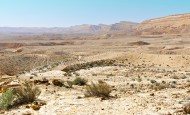
NGOs and the Negev Bedouin Issue in the Context of Political Warfare
The involvement of political advocacy NGOs in the issue over Bedouin citizens and land claims in the Negev contributes significantly to the demonization and delegitimization of Israel.

All Articles about Rabbis for Human Rights (RHR)
Further Reading
- The Blood Libel Film Ben-Dror Yemini, The Times of Israel, November 29, 2013
- Haaretz advertisement, November 10, 2013
- Why don't Rabbis for Human Rights care about Bedouin women? Alon Tal, Haaretz, September 2, 2013