Germany
Profile
| Country/Territory | Germany |
|---|
Activity
 |
 |
 |
 |
Activity
- The German federal government provides millions of euros to political advocacy NGOs in Israel, the West Bank, and Gaza through a variety of frameworks, including the Ministry for Economic Cooperation and Development (BMZ), the German Federal Foreign Office (MFA-AA), government-funded church organizations, political foundations, and independent development NGOs.
- Germany is a global leader in providing development aid (referred to as “cooperation” in Germany) and was the second largest bilateral donor in 2022 (after the US), providing $35 billion in official development assistance. Yet, Germany’s development aid system is largely non-transparent.
- Officially, German funding is aimed to “help achieve a peaceful solution in the Middle East,” and BMZ lists “support programmes for civil society and the promotion of non-violence” as “priority areas of cooperation.” However, German federal funding is allocated to, among others, organizations that promote anti-Israel BDS (boycott, divestment and sanctions) campaigns; play a leading role in lobbying for indictments of Israelis at the International Criminal Court (ICC); and promote a “one-state” vision, antisemitism, and violence. Many of these groups are linked to the EU-designated Popular Front for the Liberation of Palestine (PFLP) terror organization. (For more information, read NGO Monitor’s report “Potential Abuse of German Development Resources by Terror Affiliated Palestinian NGOs”).
- In March 2020, Germany submitted an amicus brief to the International Criminal Court (ICC) objecting to the assertion of jurisdiction in the “Situation in Palestine.” According to Germany, “The Palestinian Authority does not, nor has it ever possessed, the requisite jurisdiction and therefore cannot delegate it to the Court in order for the Court to exercise its jurisdiction.”
- In May 2019, the German Bundestag passed a landmark resolution defining BDS campaigns against Israel as antisemitic.
Developments Since October 7 Hamas Massacre
- Germany (alongside other European governments) suspended aid to Palestinians in October 2023. On December 13, 2023, the German Federal Ministry of Economic Cooperation and Development (BMZ) announced the resumption of development cooperation. According to BMZ, an internal review “found that the safeguards are robust. No indications of the misuse of funding have been found.” Contrary to BMZ’s conclusion that its local partners did not make “statements that incite to hatred and violence or deny Israel’s right to exist, and antisemitism,” NGO Monitor research provided tens of examples, all easily verifiable online, of German-government-funded NGOs openly inciting hatred and violence.
- On February 13, 2024, German news outlet Frankfurter Allgemeine reported that Germany decided to cut funding to six Israeli-designated PFLP-linked NGOs.
- In October 2021, Israel designated six Palestinian NGOs as terror organizations, claiming there are part of “a network of organizations” that operates “on behalf of the EU-designated Popular Front for the Liberation of Palestine (PFLP). Israel accused the NGOs of diverting humanitarian funds from European donors to the PFLP and recruiting members for the terror group.
- In November 2023, Germany banned the German branch of the Israeli-designated PFLP-linked NGO known as Samidoun for violating the its Basic Law (Article 9(2)) and its Associations Act; namely, it “impairs and endangers the peaceful coexistence of Germans and foreigners,” “advocates and calls for the use of violence as a means of enforcing political interests,” and “supports associations that initiate, advocate and threaten attacks against people or property.”
Lack of Transparency
- German federal funding frameworks are severely lacking in terms of transparency and public scrutiny. Selection processes, precise amounts, project evaluations, and sometimes partner organizations are not made publicly available.
- BMZ lists 34 groups involved in Germany’s development cooperation policy, including NGOs, political foundations, and church aid organizations, making it nearly impossible to follow the flow of taxpayer money (see NGO Monitor’s report “Germany’s Development Cooperation System: The Need for Greater Transparency and Accountability”).
- Precise amounts are only available for Israeli NGOs, which are required by law to report to the Israeli Registrar of Non-Profits. In 2020-2021, approximately €4.5 million of German taxpayer money was allocated to 26 Israeli NGOs.
Double-Dipping
- The multiplicity of German funding frameworks for NGOs results in “double dipping” – in which an organization is funded by more than one framework during the same timeframe, often for very similar activities.
- Germany’s Federal Ministry for Economic Cooperation and Development (BMZ) and Federal Foreign Office (AA) are both involved in Germany’s development cooperation, with each apparently responsible for varying areas of policy. However, overlap does exist, specifically in the areas of crisis prevention and conflict resolution.
- Germany provides funding to a select group of highly interconnected NGOs that share board members and are part of the same umbrella groups and networks. These NGOs also conduct evaluations for and provide information to the government, yet there is no indication that external actors conduct independent evaluations of the NGOs’ effectiveness or provide outside input. This close-knit relationship results in a closed echo chamber that grants the NGOs immense influence in a way that does not necessarily reflect public interest or democratic norms.
Direct German Funding
- The Ministry for Economic Cooperation and Development (BMZ) and the Ministry for Foreign Affairs (MFA-AA) are the primary federal authorities responsible for managing German development policy.
- These ministries are only responsible for the political aspects of international aid, with the actual implementation of projects being outsourced to state-owned limited liability companies and NGOs. This decentralized system makes it nearly impossible to follow the flow of taxpayer money.
Ministry for Economic Cooperation and Development (BMZ)
- BMZ is the primary federal authority managing German development policy work. BMZ does not implement development projects, but rather dictates policy and works to encourage economic development through international partnerships and cooperation.
- In 2022, BMZ’s budget was €12.3 billion. Of this, approximately €1.3 billion was directly allocated to “civil society and business groups and institutions.”
- According to BMZ’s website, in 2021-2022, Germany “committed 100 million euros for multi-annual bilateral cooperation projects” in the “Palestinian Territories.”
- BMZ’s three German implementing partners are German Society for International Cooperation – GIZ (see below), the German development bank KFW (see below), and Engagement Global. These partners are each responsible for implementing overlapping aspects of the Federal Government’s development policy projects.
Federal Foreign Office (MFA – Auswärtiges Amt)
- The MFA is responsible for activities related to humanitarian and emergency aid.
- In 2022, the MFA’s budget was €7.1 billion. The MFA does not publish data on its project work in foreign countries. MFA only lists two of its implementing partners on its website, “ifa zivik programme” (see below) and the “Federal Office of Administration.”
- The MFA also funds German political foundations, including Rosa Luxemburg Foundation, and German and international NGOs such as Medico International. Each of these groups then distributes funds to local partner NGOs.
German Society for International Cooperation (GIZ)
- GIZ, one of the world’s largest development agencies, leads several projects in the West Bank, many in partnership with local NGOs. These projects are commissioned and paid for by BMZ.
- In 2021, GIZ received €4 billion in German government funding.
- GIZ has provided funding to Union of Agricultural Work Committees (UAWC), Ma’an Development Center, Palestinian NGO Network (PNGO), Miftah, Palestinian Agricultural Relief Committees (PARC), Culture and Free Thought Association (CFTA), and the Gaza Community Mental Health Programme (GCMHP). (See Appendix 1 below for further funding information.)
- In March 2018, a number of GIZ employees were found to have been spreading antisemitism and anti-Israel propaganda on social media. Their statements included comparisons between Israel and the Nazis, blaming the downfall of Arab leaders on a “Hebrew spring” and depicting Israel as a two-headed monster. As a result, GIZ conducted a number of internal investigations, and one individual was terminated from their position.
KFW Development Bank
- KFW is owned by the German government and is legally considered a “public law institution.”
- KFW raises funds on the capital market and distributes them among foreign countries on behalf of the German government.
- In 2019, KFW received €2.6 billion for its role in Germany’s bilateral development cooperation.
- KFW funds “the expansion of the development center” of Ard El Insan, a Gaza based group with alleged ties to Hamas, for the “Prosperous Life or Palestinian Children in Khan Yunis.”
- In December 2019, Abdel Shafi Community Health Association (ACHA) (formerly Red Crescent Society for the Gaza Strip (RCS4GS)) reported that it had signed a contract with the United Nations Development Programme (UNDP) for the construction of an additional floor of RCS4GS’ Community and Health Center for Women. The project is funded by the “Federal Republic of Germany” through KFW. The project’s funding amount is unknown. In 2019-2022, according to the International Aid Transparency Initiative (IATI), BMZ is providing UNDP with €13 million for the project “Employment Program Poverty-oriented Infrastructure, EGP XI” in Gaza, the West Bank, and East Jerusalem.
Direct Funding for Palestinian NGOs
| NGO | Donor | 2022 | 2021 | 2020 | 2019 |
|---|---|---|---|---|---|
| Ard el Insan | KFW | N/A | |||
| Culture and Free Thought Association (CFTA) | GIZ | $342,078 | |||
| Gaza Community Mental Health Programme (GCMHP) | GIZ | N/A | N/A | N/A | |
| Ma'an Development Center | GIZ | ||||
| €700,000 | |||||
| Miftah | GIZ | $58,362 | $82,500 | ||
| Palestinian Agricultural Relief Committees - PARC | GIZ | N/A | N/A | ||
| Palestinian Vision (PalVision, or "Ruya") | GIZ | N/A | N/A | ||
| Palestinian NGO Network (PNGO) | GIZ (multi-year project 2016-2019) | N/A | |||
| GIZ (multi-year project 2019-2023) | N/A | N/A | N/A | ||
| PASSIA | GIZ | N/A | |||
| Union of Agricultural Work Committees (UAWC) | GIZ | €1,337,686 | |||
| Abdel Shafi Community Health Association (ACHA) | KFW (multi-year project 2019-2023) | N/A | N/A | N/A | N/A |
Direct Funding for Israeli NGOs (amounts in NIS)
| NGO | Donor | 2022 | 2021 | 2020 | 2019 |
|---|---|---|---|---|---|
| Comet-ME | MFA | 1,029,689 | 1,711,153 | 1,935,488 | 3,181,092 |
| Bimkom | Embassy | 30,408 | 153,598 | ||
| HaMoked | MFA | 182,200 | |||
| Human Rights Defenders Fund | MFA | 76,496 | 74,859 | ||
| Ir Amim | Embassy | 274,541 | |||
| Geneva Initiative | Embassy | 53,457 | |||
| Negev Coexistence Forum | MFA | 18,130 | |||
| PHR-I | Embassy | 230,000 | |||
| Public Committee Against Torture in Israel | Embassy | 295,022 | 218,910 | ||
| Terrestrial Jerusalem | MFA | 455,000 | |||
| Yesh Din | MFA | 775,313 | 461,448 |
Indirect Funding
Civil Peace Service (ZFD)
- ZFD is a consortium of nine German NGOs including Action Committee Service for Peace (AGDF), Association for Development Cooperation (AGEH), Bread for the World-EED, EIRENE – Ecumenical Peace Service, Forum Civil Peace Service (forumZFD), German Agency for International Cooperation (GIZ), KURVE Wustrow, peace brigades international (pbi), and World Peace Service (WFD).
- ZFD “sends experts to international partner organistions in order to prevent the outbreak of violence without military action and to strengthen the force of civil society.”
- In 2019, ZFD’s budget was €55 million.
- ZFD has provided funding to a number of highly biased and politicized NGOs active in the Arab-Israel conflict including Al-Haq, Defense for Children International -Palestine, Youth Against Settlements, Combatants for Peace, Holy Land Trust, Parents Circle Families Forum (PCFF), Adalah, and Badil.
- Both Al-Haq and DCI-P have ties to the Popular Front for the Liberation of Palestine (PFLP), a terrorist organization designated as such by the US, EU, Canada, and Israel.
- Al-Haq is a leader in anti-Israel “lawfare” campaigns and BDS activities. On October 22, 2021, the Israeli Ministry of Defense declared Al-Haq a “terror organization” because it is part of “a network of organizations” that operates “on behalf of the ‘Popular Front’.” Al-Haq’s General Director Shawan Jabarin is linked to the PFLP. According to the Israeli Supreme court, Jabarin “is apparently acting as a manner of Doctor Jekyll and Mister Hyde, acting some of the time as the CEO of a human rights organization, and at other times as an activist in a terror organization.”
- Numerous individuals with alleged ties to PFLP have been employed and appointed as board members at DCI-P. For more information on DCI-P’s PFLP ties, read NGO Monitor’s report “Defense for Children International – Palestine’s Ties to the PFLP Terror Group.” On October 22, 2021, the Israeli Ministry of Defense declared Defense for Children International – Palestine (DCI-P) a “terror organization” because it is part of “a network of organizations” that operates “on behalf of the ‘Popular Front’.”
- Both Al-Haq and DCI-P have ties to the Popular Front for the Liberation of Palestine (PFLP), a terrorist organization designated as such by the US, EU, Canada, and Israel.
- ZFD’s website lists six projects implemented by Palestinian and Israeli NGOs
ZFD Projects
| Project | NGO Partners | Years |
|---|---|---|
| Side by side: strengthening civil society forces | Adalah, Al-Haq, BADIL, DCI-P | 2021-2024 |
| "Politics of small steps": Meeting creates trust | 7amleh, Combatants for Peace, Palestinian Center for Peace and Democracy, Standing Together, and 20 other NGOs | 2020-2023 |
| There is another way: unite young people and establish peace education | Alliance for Middle East Peace (ALLMEP), Combatants for Peace, Holy Land Trust | 2021-2024 |
| Megaphone for Peace: Strengthen Nonviolent Initiatives | Human Rights Defenders Fund, Youth Against Settlements, and two other organizations | 2020-2023 |
| With valve to the goal: young people in refugee camps learn alternatives to hatred and violence | Sawa Committee and eight other NGOs | 2014-2022 |
| Show alternatives: creative methods for constructive ways | Sawa Committee and eight other NGOs | 2020-2022 |
Medico International
- Medico International has received funds from Germany through the German Federal Foreign Office (AA) and German Federal Ministry for Economic Cooperation and Development (BMZ).
- In 2021, MI spent €1.8 million, including with the “support of AA [German Federal Foreign Office], BMZ [Germany’s Federal Ministry for Economic Cooperation and Development], and stiftung m.i.,” for its numerous projects in “Israel/Palestine.”
- Medico has provided funds to highly politicized Israeli and Palestinian advocacy NGOs, including Who Profits, Adalah, Breaking the Silence, Physicians for Human Rights – Israel (PHR-I), Union of Agricultural Work Committees (UAWC), The Freedom Theater (TFT), and Palestinian Medical Relief Society (PMRS). (See table below for further funding information.)
Church Aid Frameworks
- Since 1962, BMZ is obligated under German law to provide financial support for the development work of church-aid organizations, with two church NGOs chosen as representatives – the Catholic Misereor and the Protestant Development Service (EED), which has since merged with Brot fuer die Welt (BfW).
- According to data from the Israeli Registrar of Non-Profits, 54% of total reported German funding to Israeli NGOs active in the Arab-Israeli conflict in 2016-2017 came from BfW/EED and Misereor.
Misereor
- MISEREOR is the official aid framework of the Catholic Church in Germany.
- MISEREOR has provided grants to a number of highly biased and politicized NGOs active in the Arab-Israeli conflict, including: Palestinian Center for Human Rights (PCHR), Yesh Din, Breaking the Silence, Zochrot, and HaMoked. (See Appendix 1 below for available financial information.)
- In January 2017, as a member of the church umbrella organization CIDSE’s Palestine-Israel Working Group, MISEREOR released a report, “No Place Like Home: A Reader On The Forced Internal Displacement Of Palestinians In The Occupied Palestinian Territory And Israel,” that was designed as a tool to lobby the European Union. The report calls for European “concrete action” and “promoting accountability” against Israel in order to “address[] the Israeli policies which are the root causes of displacement.”
Bread for the World – EED
- Brot für die Welt-Evangelischer Entwicklungsdienst (BfW-EED) is the official aid framework of the Protestant Church in Germany.
- In June 2017, BfW-EED issued a press release in which it stressed “For Bread for the World any promotion ends with the denial of Israel’s right to exist, calling for the boycott of goods from Israel, or promotion of antisemitism” (NGO Monitor translation). Contrary to this claim, BfW funds radical and politicized NGOs that promote BDS (boycott, divestment, and sanctions) and “lawfare” campaigns against Israel, including Coalition of Women for Peace (CWP), Who Profits, and Al-Haq (see Appendix 1 for further funding information).
- Bread for the World “administer[s]” the World Council of Churches’ Ecumenical Accompaniment Programme in Palestine and Israel (EAPPI). According to Bread for the World, “Bread for the World supports this EAPPI program with ecclesiastical funds, with a contribution to the shared costs of the Geneva office and the cost of preparing and posting 10-15 volunteers from Germany.”
- EAPPI sends volunteers to the West Bank to “witness life under occupation.” Upon completion of the program, the volunteers return to their home countries and churches where many engage in anti-Israel advocacy, including advocating for BDS campaigns in churches, comparing Israel to apartheid South Africa and Nazi Germany, and other delegitimization strategies.
Political Foundations (Stiftungen)
- There are six political foundations in Germany, each affiliated with a political party: Friedrich-Ebert-Stiftung (Social Democratic Party – SPD), Konrad-Adenauer-Stiftung (Christian Democratic Union of Germany – CDU), Hans-Seidel-Stiftung (Union parties – CSU), Friedrich-Naumann-Stiftung (Free Democratic Party – FDP), Heinrich-Böll-Stiftung (Green Party), and Rosa-Luxemburg-Stiftung (The Left). Political foundations have representative offices in foreign countries where they carry out projects in cooperation with local partner organizations. (See Appendix 1 for further funding information.)
- Friedrich Ebert Stiftung partners with six NGOs, including PASSIA.
- Heinrich Boell Foundation has provided funds to +972 Magazine, ACRI, and Ir Amim .
- Rosa Luxemburg Foundation has provided funding to Zochrot, Bimkom, Combatants For Peace, Kerem Navot, Mada al-Carmel, Mossowa, Negev Coexistence Forum, Sadaka Reut and The Social TV.
- In 2022, these political foundations received €340 million in government funds. Political foundations receive funding from the Federal Ministry of the Interior, the MFA-AA, and BMZ. The amount of funding received is dependent on the number of seats the party has in parliament (i.e. the more seats a particular party has, the more government funding that party’s political foundation will receive).
- In November 2022, RLS-Israel, alongside the Goethe-Institut, was meant to hold the event “Grasping the Pain of the Others – Holocaust, Nakba and German Remembrance Culture.” According to RLS: “Almost 75 years after the declaration of the establishment of Israel, remembering in Israel remains a politically contested terrain. Holocaust survivors and their descendants focus on the extermination of Europe’s Jews by the Nazis, while many Palestinians focus on the fateful year of 1948, when hundreds of thousands of people were destined to flight and displacement by Jewish fighters – known in Arabic as the Nakba ( catastrophe).”
- The Simon Wiesenthal Center, Israel’s Ambassador to Germany, and many others condemned this agenda as highly offensive. Following criticism, the event was postponed indefinitely.
- In September 2022, RLS, in partnership with BADIL, organized an educational workshop on “equipping youth with knowledge about human rights and international law pertaining to the case of Palestine.” RLS previously sponsored BADIL’s working paper on “Palestinian Youth Perspectives on the Oslo Peace Process: Successes, Failures and Alternatives.”
- BADIL is the main Palestinian “right of return” NGO, and a leader of BDS campaigns and political warfare against Israel. This NGO has published antisemitic cartoons on its website, as well as imagery calling for the destruction of Israel (also a form of antisemitism) and denying Israel’s right to exist. Cartoons published by BADIL include classic antisemitic tropes, featuring a Jewish man, garbed in traditional Hasidic attire, with a hooked nose and side locks. He stands above a dead child and skulls, holding a pitchfork dripping with blood. Additional graphics deny the legitimacy of Israel in any form, and oppose peace agreements.
- According to a May 2021 Bundestag discussion, RLS partnered with the Union of Agricultural Work Committee (UAWC) in implementing “training and analysis in the areas of food sovereignty and labor rights.”
- The Union of Agricultural Work Committee (UAWC) is identified by Fatah as an official “affiliate” and by USAID-engaged audit as the “agricultural arm” of the Popular Front for the Liberation of Palestine (PFLP), a terrorist organization designated as such by the US, EU, Canada, and Israel.
- On October 22, 2021, the Israeli Ministry of Defense declared UAWC a “terror organization” because it is part of “a network of organizations” that operates “on behalf of the ‘Popular Front’.”
- Two UAWC employees, who worked with the organization’s finances, were arrested in 2019 and are currently standing trial for being part of a PFLP terror cell that perpetrated the August 2019 murder of a 17-year-old Israeli.
- In 2020, RLS sponsored a research paper prepared by the Health Work Committees (HWC) on “Facts related to the Right to Equitable Access to Health and Confronting the Privatization of Arab Health Systems.”
- Numerous HWC staff members, founders, board members, general assembly members, and senior staff members have ties to the PFLP terror group. For more information on HWC’s PFLP ties, read NGO Monitor’s report “Health Work Committees’ Ties to the PFLP Terror Group.”
- In January 2020, HWC was designated by Israel as a terrorist organization.
- Employees of HWC were arrested in 2019 for being part of a PFLP terror cell. Walid Hanatsheh (Abu Ras), listed as a PNGO board member on behalf of a PFLP-linked NGO, Health Work Committees (HWC),2 and allegedly the leader of PFLP “military” operations in the West Bank, was arrested in October 2019. According to a December 2019 indictment in Israeli military court, he commanded Samer Arbid. Following his arrest, the PFLP labeled Hanatsheh a “leader in the Popular Front.”
- On November 10, 2021, Juanna Sanchez Rishmawi, a fundraiser for HWC, pled guilty to “carrying out services on behalf of a banned organization,” the Popular Front for the Liberation of Palestine (PFLP). According to the indictment, Rishmawi raised millions in donations from Spanish governmental and civil society bodies to HWC since 1993, significant portions of which were then diverted to the PFLP.
- In 2018, RLS paid for and conducted “internal research” into NGO Monitor, resulting in a defamatory and inaccurate publication.
Funding via UN Frameworks
Funding to UNRWA
- According to a Parliamentary Question (19/13638, September 2019), there are two German ministries responsible for contributions to UNRWA: the Ministry of Foreign Affairs (AA) and the Ministry for the Economic Cooperation and Development (BMZ).
- Germany is the second largest donor of UNRWA after the USA. According to UNRWA, in 2022, (last available data published), Germany provided UNRWA with $202,054,285.
- In 2019-2020, according to the International Aid Transparency Initiative (IATI), Germany’s MFA provided €22.5 million for the project “UNRWA Employment promotion and infrastructure in Gaza.”
Funding to the UN Office for the Coordination of Humanitarian Affairs (UN-OCHA)
- In 2021–2022, Germany provided €1 million to OCHA.
- UN-OCHA has provided funding to a number of highly biased and politicized NGOs active in the Arab-Israeli conflict including the Palestinian Center for Human Rights (PCHR), Union of Health Work Committees(UHWC), Union of Agricultural Work Committees (UAWC), Al Mezan, Palestinian Medical Relief Society (PMRS), Health Work Committees (HWC), Culture and Free Thought Association, Islamic Relief, and MA’AN Development Center.
Funding to the UN-OCHA oPt Humanitarian Fund
- In 2022, Germany provided $16.8 million to the UN-OCHA oPt Humanitarian Fund.
- The Fund has provided grants to a number of highly biased and politicized NGOs active in the Arab-Israeli conflict, including B’Tselem, Palestinian Center for Human Rights(PCHR), Union of Agricultural Work Committees (UAWC), Union of Health Work Committees (UHWC), Ma’an Development Center, HaMoked, Medical Aid for Palestinians (MAP), and Health Work Committees (HWC).
Funding to the World Food Program
- In 2022, Germany provided $21.3 million to projects in Gaza with the World Food Program.
- According to UN OCHA’s FTS, these projects appear to be part of the World Food Program’s Food Security Sector.
- According to documents published by the Food Security Sector, the Sector distributes funds and partners with NGOs, including UAWC, Ma’an Development Center, and Palestinian Agricultural Relief Committees (PARC).
Funding to the United Nations Development Programme (UNDP)
- In 2019, according to the International Aid Transparency Initiative (IATI), BMZ provided €13 million for the project “Employment Program Poverty-oriented Infrastructure, EGP XI.” The project was implemented by the UNDP.
Appendix 1: German Funding to Israeli and Palestinian NGOs (amounts in NIS unless specified)
Figures for Israeli NGO based on quarterly financial reports submitted to the Israeli Registrar of Non-Profits.
Appendix 2: German Funding to UN Bodies for Projects in Israel, the West Bank, and Gaza
| UN Body | 2022 | 2021 | 2020 |
|---|---|---|---|
| Occupied Palestinian territory Humanitarian Fund | $16,791,061 | $12,651,832 | $13,821,818 |
| Office for the Coordination of Humanitarian Affairs (OCHA) | $19,932,258 | $1,157,203 | $1,103,752 |
| United Nations Relief and Works Agency for Palestine Refugees in the Near East | $98,458,654 | $93,674,980 | $60,584,183 |
| World Food Programme | $21,344,873 | $22,873,944 | $11,470,337 |
| World Health Organization | $1,603,216 | $2,922,307 | $1,000,000 |
Related Articles
German Funding in Light of the October 7 Massacre
NGOs funded through German development programs (Entwicklungshilfe) with the stated aim to promote “human rights” and “international law” have failed to condemn these blatant violations of human rights and humanitarian principles.
Report: Potential Abuse of German Development Resources by Terror Affiliated Palestinian NGOs
The report offers a set of practical recommendations for Germany aimed at assisting policy makers in expanding and implementing existing anti-terror regulations, so that more robust vetting can be introduced in the context of development aid.
NGO Monitor Correspondence with the German Ministry of Foreign Affairs Regarding German Funding to Terror Linked Palestinian NGOs
In June 2020, NGO Monitor sent a letter to the German Ministry of Foreign Affairs regarding German funding to terror linked Palestinian NGOs
Germany’s Development Cooperation System: The Need for Greater Transparency and Accountability
Germany is one of the largest donors of international development aid in the world, allocating $24.7 billion to bilateral assistance in 2017 alone. However, due to an extreme lack of transparency, overlapping responsibilities for multi-ple government agencies, and the involvement of dozens of different actors, it is difficult to assess the effectiveness of this aid, raising concerns about po-tential abuse of public funds and inefficient management.
German Federally Funded Church Organizations’ Support for NGOs Active in the Arab-Israeli Conflict
Church aid organizations in Germany, which receive most of their budgets from the government, are major funders of politicized NGOs in Israel and the PA.
German Federal Frameworks Involving Civil Society in the Arab-Israeli Conflict
German federal funding is allocated to, amongst others, political advocacy NGOs that promote BDS and lawfare campaigns, through direct and indirect funding mechanisms.
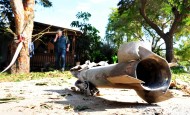
German Funding for NGOs that Demonize Israel
The German government funds organizations that contribute to the growing demonization of Israel and BDS campaigns. Such funding is a major source in manipulating German societal perceptions of Israel and constitutes a misuse of taxpayer monies.

Lawfare and the UK: Dutch & German government-funded NGO Triggers ICC Investigation
Two organizations sent a brief to the Prosecutor of the ICC, alleging "war crimes committed by the British armed forces against detainees in Iraq from 2003 to 2008."
German Funding for Political Advocacy NGOs Active in the Arab-Israeli Conflict
German funding to political NGOs active in the Arab-Israeli conflict often supports radical organizations that oppose peace, promote demonization, political warfare, and in some cases, blatant antisemitism.
Further Reading
- Bread for the World and Money for Anti-Israel Propaganda (German) Alex Feuerherdt, Die Achse des Guten, January 1, 2016
- German Politician: Israel´s Security Fence is Worse Than Communist Berlin Wall Benjamin Weinthal, The Jerusalem Post, September 3, 2015
- "We Oppose Indiscriminate Criticism" translated from original German), Interview with Michael Borchard, Cicero Magazine, March 25, 2015
- "Germany Supports Modern Antisemitism" (translated from original German), Interview with Gerald Steinberg, Cicero Magazine, December 11, 2014